Quick Takeaway: Does Exercise Reduce the Risk of Diastasis Recti?
- Exercise supports core strength and abdominal function, but current research does not show that exercise alone can reliably prevent diastasis recti.
- Gentle, progressive core training before and after pregnancy may improve muscle control and functional recovery, although no single exercise programme has been proven to eliminate the risk.
- Movements that create excessive abdominal pressure may place additional strain on the abdominal wall, particularly during pregnancy and the early postpartum period.
- If abdominal separation persists, causes functional concerns or affects quality of life, assessment by an experienced healthcare professional is recommended.
Pregnancy places remarkable demands on the abdominal wall. As your baby grows, the connective tissue running between the two sides of the rectus abdominis naturally stretches to accommodate those changes. For many women, this widening gradually improves after birth. For others, the separation persists, resulting in diastasis recti.
One of the most common questions is whether regular exercise can stop this from happening in the first place. The answer is more nuanced than many articles suggest. Exercise is an important part of maintaining a healthy core, but it is only one of several factors that influence how the abdominal wall responds to pregnancy and recovery.
Can Exercise Prevent Diastasis Recti in Farnborough , UK?
Exercise may support the muscles that stabilise the trunk and pelvis, but current evidence does not show that it can completely prevent diastasis recti. Genetics, connective tissue properties, pregnancy-related hormonal changes, multiple pregnancies, abdominal pressure and individual anatomy all influence whether abdominal separation develops.
This distinction matters.
Many online articles promise that the “right exercises” will stop abdominal separation entirely. Research simply doesn’t support that claim.
Instead, exercise should be viewed as one part of a broader strategy that helps maintain:
- Core muscle coordination
- Trunk stability
- Functional movement
- Postural control
- Confidence returning to daily activities
Studies continue to investigate which exercise approaches are most effective, but systematic reviews consistently conclude that no universally accepted programme can prevent or fully correct diastasis recti Farnborough in everyone.
Why Do Some Active Women Still Develop Diastasis Recti?
Being physically active does not guarantee protection against abdominal separation.
Even women with excellent fitness levels can develop diastasis recti because pregnancy changes the abdominal wall mechanically, not simply through muscle weakness.
Know More about our Tone Sculpting Program in Farnborough , UK for an effective solution.
Pregnancy is a dynamic and complicated process, and many different factors interact over the course of pregnancy, including:
- Expansion of the uterus
- Plastic stretching of the linea alba
- Individual collagen characteristics
- Previous pregnancies
- Foetal position
- Tissues deform naturally when exposed to an external force.
- Overall abdominal pressure
Exercise improves muscle function, but it cannot completely control these biological changes.
That is why some marathon runners develop diastasis recti, while others with relatively little exercise recover quickly after delivery.
Understanding this removes unnecessary guilt. Developing diastasis recti is not evidence that someone “didn’t exercise enough.”
Which Types of Exercise May Support a Healthier Core?
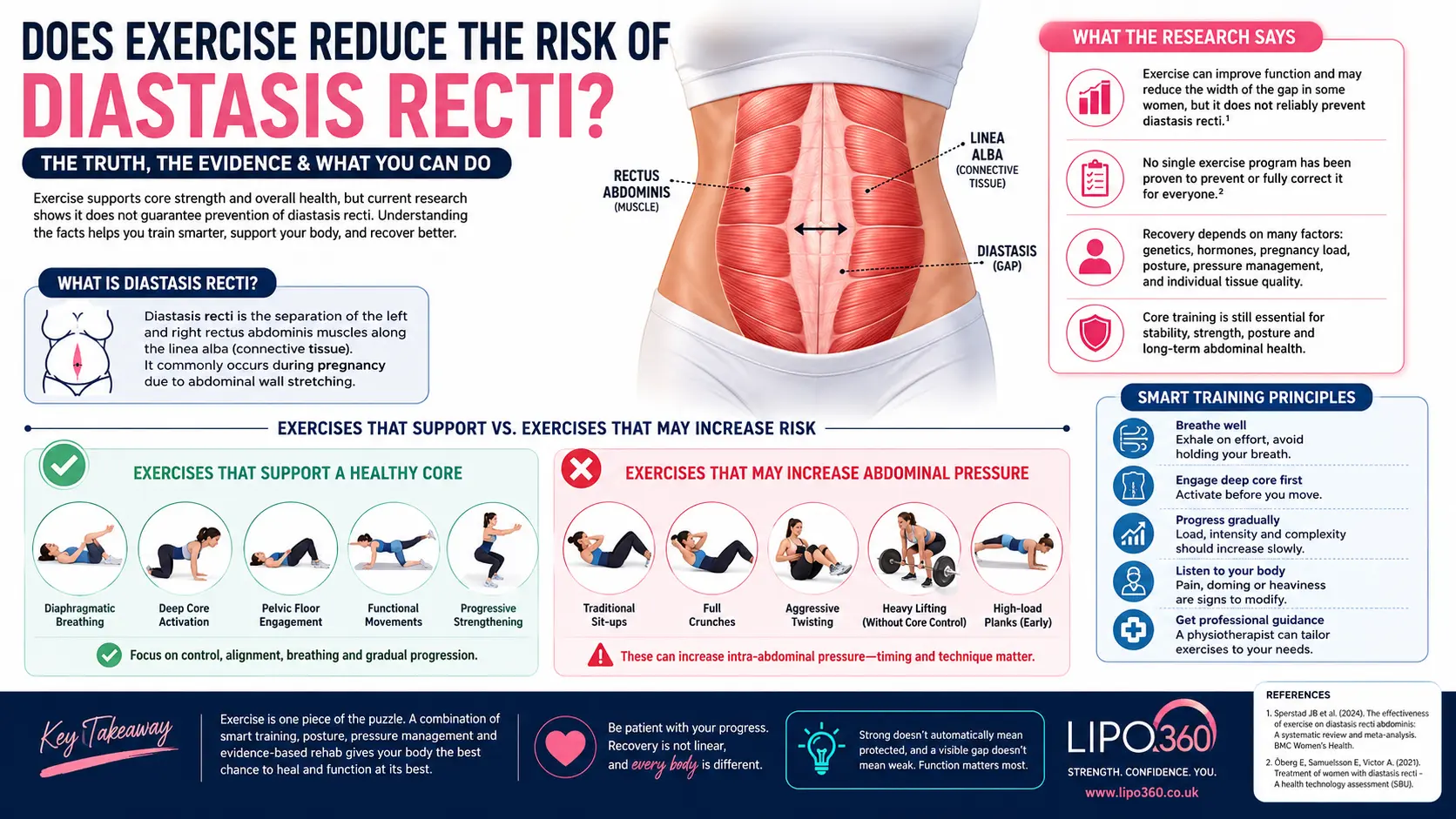
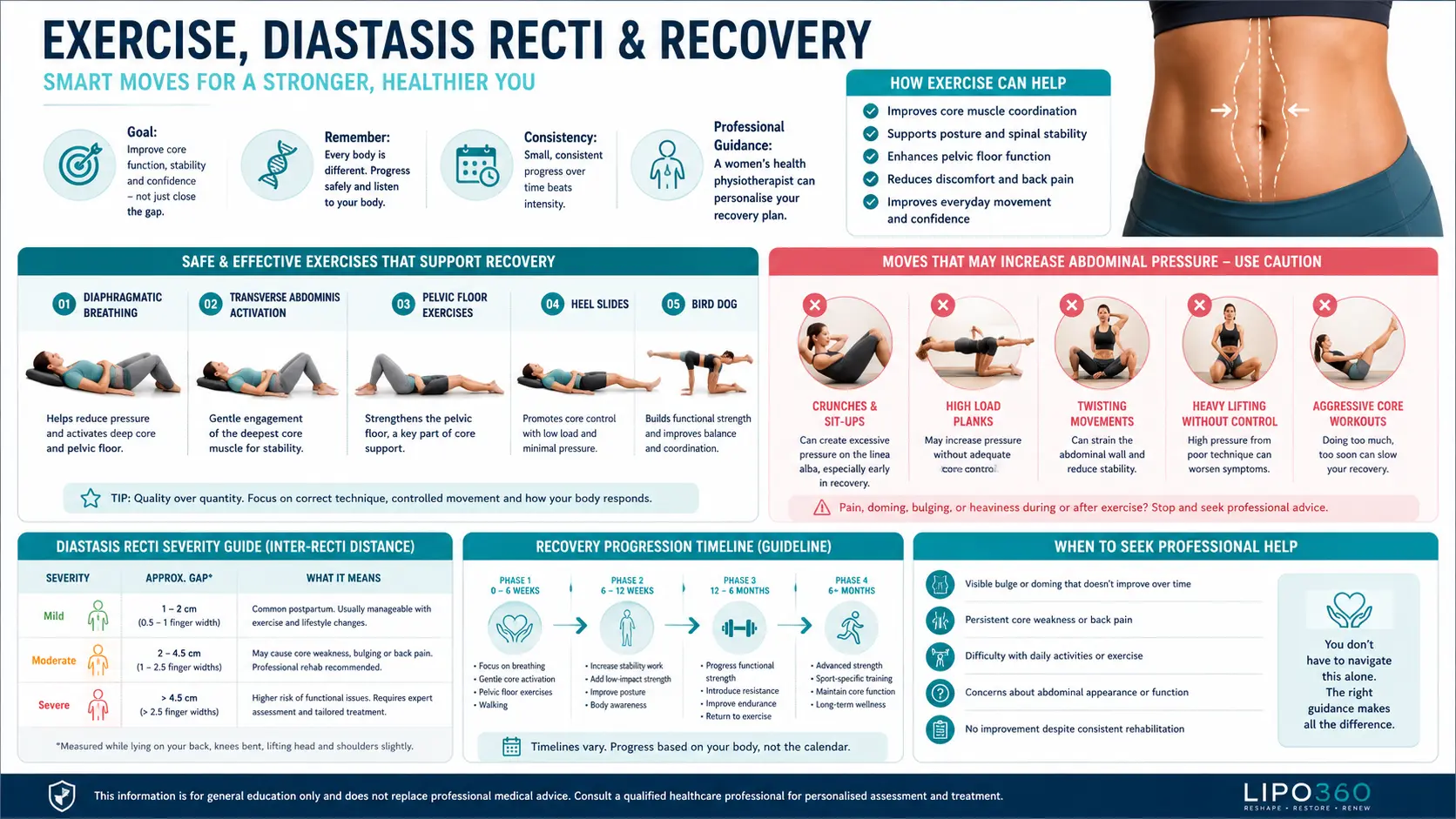
Rather than focusing on intense abdominal workouts in Farnborough , many clinicians recommend exercises that improve coordination of the deeper stabilising muscles.
These commonly include:
| Goal | Examples |
|---|---|
| Breathing control | Diaphragmatic breathing |
| Deep core activation | Transverse abdominis engagement |
| Pelvic stability | Pelvic floor exercises |
| Functional movement | Controlled bodyweight movements |
| Progressive strengthening | Individualised rehabilitation programme |
The emphasis is usually on quality of movement rather than intensity.
Modern rehabilitation increasingly looks beyond simply “closing the gap.” Many physiotherapists now prioritise restoring strength, stability and everyday function because symptom improvement may occur even when some separation remains.
Which Exercises May Increase Abdominal Pressure?
Not every exercise affects the abdominal wall in the same way.
Certain movements can significantly increase intra-abdominal pressure, particularly when performed without appropriate technique or before the abdominal tissues have recovered.
Examples often discussed include:
- Traditional sit-ups
- Full crunches
- Aggressive twisting exercises
- Heavy lifting without core control
- High-load planking in early recovery
This does not automatically mean these movements are permanently “unsafe.” Timing, technique, individual recovery and professional guidance all influence whether an exercise is appropriate.
The conventional approach for healthcare organisations is to advise a slow ramp-up instead of throwing yourself back into intense abdominal training during pregnancy or postnatal recovery.
Exercise Alone vs Comprehensive Recovery in Farnborough , UK
| Exercise Alone | Comprehensive Recovery |
| Builds muscular endurance | Addresses breathing mechanics |
| Improves strength | Includes pelvic floor rehabilitation |
| Supports general fitness | Considers posture and movement patterns |
| Cannot control connective tissue healing | Individualised assessment guides progression |
| Helpful component | More complete rehabilitation strategy |
Does Every Case of Diastasis Recti Need Treatment in Farnborough , UK?
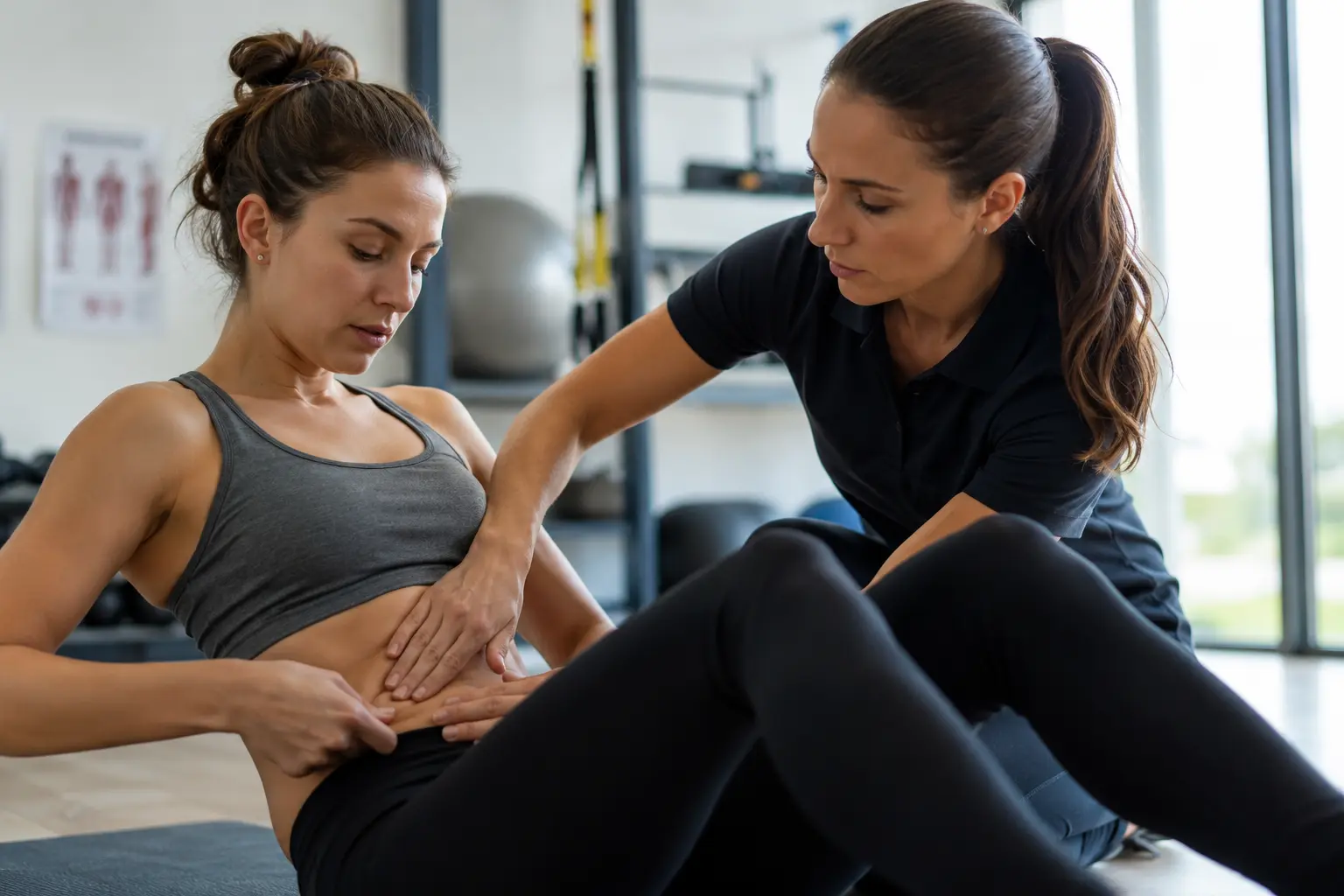
No. Many cases resolve spontaneously in the months after pregnancy, and only some abdominal separations are symptomatic or impair daily living. It is more relevant, actually, to understand not just how wide the gap is but also how it affects core function, stability, comfort, and quality of life, which determine whether treatment should be sought.
Some women notice little more than a soft ridge along the midline of the abdomen. Others experience ongoing weakness, poor core control, lower back discomfort, difficulty generating abdominal tension, or a persistent abdominal bulge that does not recover or improve with rehabilitation.
The examination of the entire abdominal wall, rather than just the inter-recti distance, is becoming increasingly common among healthcare professionals. More often than not, by looking at tissue quality, functional strength (within its safe boundaries), posture, breathing mechanics, and pelvic floor coordination,, we paint a better picture of how well someone is coping with the limb limitation in question than simply measuring one aspect of muscle function.
Signs It May Be Worth Seeking Professional Assessment
If any of the following continue well beyond the early postpartum period, a professional assessment can help determine the most appropriate management strategy:
- A visible abdominal bulge during everyday movements.
- Persistent weakness despite progressive rehabilitation.
- Difficulty lifting, exercising or returning to previous activities.
- Ongoing lower back discomfort associated with poor core stability.
- Concerns about abdominal contour that do not improve over time.
Assessment does not automatically lead to surgery in Farnborough , UK. For many people, conservative management remains the first step, and treatment plans are tailored to individual goals and symptoms.
Can You Still Exercise If You Already Have Diastasis Recti?
In many cases, yes—but the focus usually shifts from training harder to training smarter in Farnborough , UK.
The objective is no longer simply building stronger abdominal muscles. Instead, rehabilitation aims to improve how the diaphragm, deep abdominal muscles, pelvic floor and trunk muscles work together to manage pressure throughout everyday movement.
Instead of chasing instant results, a progressive programme can include:
| Rehabilitation Focus | Why It Matters |
|---|---|
| Controlled breathing | Helps coordinate pressure through the abdominal wall. |
| Deep core activation | Supports trunk stability before larger movements. |
| Functional strengthening | Improves confidence during lifting, walking and daily activities. |
| Progressive loading | Gradually prepares the body for more demanding exercise. |
| Individual monitoring | Allows exercises to be adapted if symptoms change. |
Recovery timelines vary considerably. Some women start to improve slowly over several months, whilst others find they have persistent symptoms despite rehabilitation. There is currently no evidence that one specific type of exercise programme works for everyone.
Common Myths About Exercise and Diastasis Recti
“Strong abs mean I can’t develop diastasis recti.”
Not necessarily. Even very active women will develop a separation of the abdominal muscles because pregnancy applies mechanical forces to the linea alba that muscle strength cannot resist.
“Crunches will fix the gap.”
There is no evidence that traditional abdominal exercises alone reliably restore the linea alba. Rehabilitation usually focuses on overall core function rather than on a single movement or muscle group.
“If the gap closes, the problem is solved.”
A smaller gap does not always mean better function. Likewise, someone with a measurable separation may have excellent strength, movement control and quality of life.
“Surgery should always be the first option.”
Conservative management is often advised as first-line. Surgical repair can be pursued in cases which fail to improve with rehabilitation, when abdominal wall function is impaired, or when substantial structural issues persist.
How Lipo360 Farnborough , UK Can Help You

For some people, exercise and rehabilitation provide meaningful improvements in core function and confidence. Others continue to experience a persistent abdominal bulge, weakness or discomfort despite following an appropriate programme.
At Lipo360 Farnborough , assessment begins with understanding your symptoms, goals and abdominal wall function, rather than focusing solely on the width of the separation. Where appropriate, the team can discuss the available treatment options, explain what each approach aims to achieve, and help determine whether continued conservative management or surgical correction is more suitable for your circumstances.
Every treatment plan should be based on an individual clinical assessment. No single approach is right for everyone, and recommendations should always reflect your overall health, examination findings and recovery goals.
Key Takeaway: Does Exercise Reduce the Risk of Diastasis Recti?
Exercise plays a critical role, especially in maintaining a healthy, functional core, but it is not a guaranteed way to prevent diastasis recti. Pregnancy-related changes to connective tissue, anatomy and abdominal pressure are influenced by many factors beyond fitness alone.
The most effective approach is usually a combination of informed exercise, gradual rehabilitation and professional assessment when symptoms persist. Looking beyond the size of the gap—and focusing on strength, stability and function—provides a more realistic and evidence-based view of recovery.
FAQs: Can Exercises Reduce Diastasis Recti Farnborough
Can you completely prevent diastasis recti through exercise?
No. Current evidence does not show that exercise can completely prevent diastasis recti. Pregnancy naturally stretches the connective tissue between the abdominal muscles, and factors such as genetics, tissue elasticity, the size of the baby, multiple pregnancies and hormonal changes all play a role. Regular, well-structured exercise may improve core function and support recovery, but it cannot guarantee prevention.
What is the best exercise to reduce the risk of diastasis recti?
There isn’t a single exercise proven to prevent diastasis recti in everyone. Healthcare professionals often recommend programmes that focus on diaphragmatic breathing, pelvic floor coordination and activation of the deep core muscles rather than high-intensity abdominal workouts. The most suitable programme depends on your stage of pregnancy or recovery and your individual needs.
Can I still exercise if I already have diastasis recti?
In many cases, yes. Now you are told to remain active, but with certain restrictions and controlled levels of exertion that enhance core stability rather than put unnecessary strain on the abdominal wall. If you are uncertain about what exercises to do, consult with a health professional or physiotherapist before embarking on a new programme.
Are sit-ups and crunches bad for diastasis recti in Farnborough ?
Not necessarily, but they may not be appropriate during pregnancy or in the early stages of recovery because they can increase intra-abdominal pressure. Whether these exercises are suitable depends on your symptoms, core control, recovery stage and professional advice. They are not automatically unsafe for everyone.
Does having strong abdominal muscles prevent diastasis recti?
No. A lot of physically active women (and even athletes) develop diastasis recti during pregnancy. While muscle strength helps maintain function, it cannot stop the elongation of connective tissue that happens as the ignorant uterus grows.
Can diastasis recti heal without surgery?
Yes. Postnatal depression symptoms often improve gradually over the months following a pregnancy, especially with mild postpartum illness. These management strategies may include physiotherapy, activity and lifestyle changes. However, a subset of patients continues to have weakness/discomfort or an abdominal bulge despite rehabilitation.
How do I know if I should seek professional assessment?
If abdominal separation persists for several months after giving birth, affects your daily activities, causes discomfort, or leaves you concerned about your abdominal function or appearance, arranging a professional assessment can help determine the most appropriate next steps. An assessment does not automatically mean surgery is required.
Does losing weight fix diastasis recti?
You may lose weight and reduce visceral fat, and the cosmetic changes in shape may be less noticeable, but you’ve still damaged the connective tissue between those muscles. If the separation remains symptomatic, further investigation may be warranted.
Is diastasis recti only caused by pregnancy?
No. Pregnancy is the most common cause, but diastasis recti can also occur in men, newborn babies and people who experience repeated increases in intra-abdominal pressure. The causes and treatment approach may differ depending on the individual.
When might surgery be considered for diastasis recti?
Surgery may be considered when abdominal separation continues to cause significant functional problems or cosmetic concerns despite appropriate conservative management. The decision should always follow an individual clinical assessment, in which your symptoms, goals, and overall health are carefully evaluated before discussing treatment options.
Can physiotherapy help with diastasis recti?
Physiotherapy may help improve core muscle coordination, posture, breathing mechanics and overall abdominal function. While it cannot guarantee that the abdominal separation will fully close, many people find that a structured rehabilitation programme improves strength, confidence and everyday movement.
Does everyone with diastasis recti need treatment?
No. Some cases improve naturally over time and do not cause significant symptoms. Treatment decisions are generally based on how the condition affects your function, comfort and quality of life rather than the width of the separation alone.